
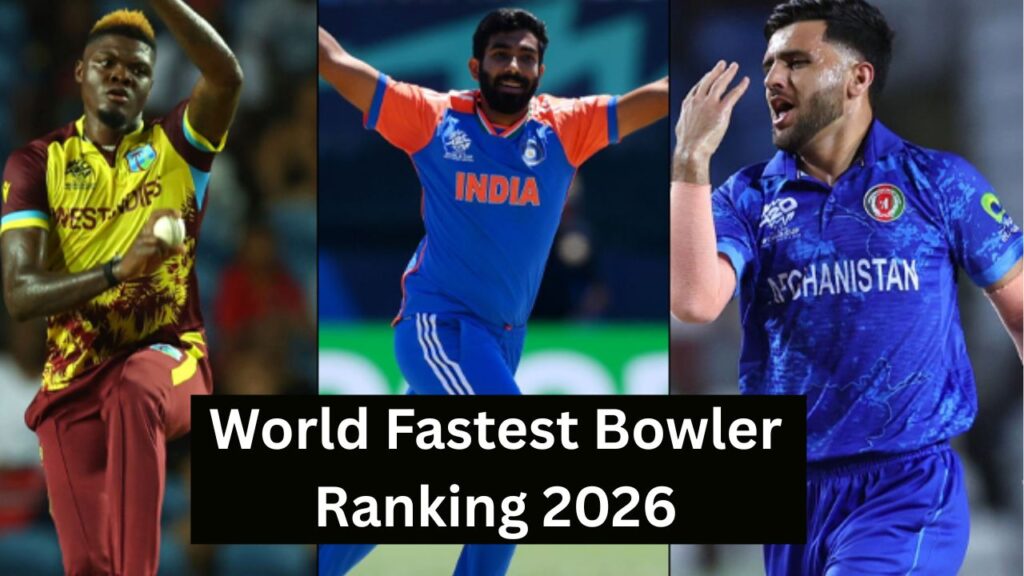

The world fastest bowler ranking is one of the biggest and most frequently searched topics in cricket. Fast-paced bowling is always an excitement to spectators, power + accuracy at speed can determine the outcome of a game. Fast bowlers in modern cricket: From searing spells that rock the top order of batters to record-breaking fast deliveries well over 160 km/h, there is little doubt fast bowlers personify aggression and domination.
In this detailed guide, we look at the world fastest bowler ranking, explain how bowling speed is measured, and examine the fastest bowlers since cricket began. This article is aimed at lovers of cricket and written in a simple, reader-friendly style while still meeting SEO criteria.
Understanding the Ranking of the Worldʼs Fastest Bowlers in Cricket
In fact, the worldʼs fastest bowler ranking is not an ICC official ranking at all. It is a comparative list of recorded bowling speeds in international cricket. Usually these rankings spring from speed gun data gathered during matches, predominantly from Test, ODI, and T20 internationals. The faster and more consistently a bowler releases the ball, the higher they figure in discussions on the ranking of the worldʼs fastest bowlers.
However, a great bowler is not defined solely by speed. On the contrary, power wears out accuracy; and munition doesnʼt mean S-fly or around the world in six deliveries!! But pace is still a subject of endless debate for fans and experts, as we can see from the discussions above about the ranking of world fastest bowlers. Even when their parents were alive some cricket buffs reminisce: “This or that was before my time, but I gather he was pretty quick.”
How Bowling Speed Is Measured for World Fastest Bowler Ranking
To understand the world fastest bowler ranking, we must understand first of all how bowling speed is measured. In modern cricket, radar equipment measures the speed of the ball immediately after it is pitched by a bowler. This technology became common in the late 1990s and early 2000s, so modern records are more reliable than apparently older estimates.
The main points are: Speed is measured in Kms per hour (km/h). It is advisable to measure the maximum speed of a bowl’s flight, irrespective of average film rate. Different situations and field conditions can cause upswings or reductions in the pace of bowling for individual bowlers.Because older players did not have access to modern speed guns, comparison of speed across eras in the world fastest bowler ranking is often the subject of debate among cricket historians.
Official and Unofficial World Fastest Bowler Rankings
The world fastest bowler ranking is not a formally or officially announced ranking.
Instead, the rankings are fundamentally derived from verified match data, broadcaster’s records and cricket boards.
For many years, fast-bowling speeds have been recorded by broadcasters such as Channel Nine, Sky Sports, and in ICC tournament coverage.
Unofficial rankings, however, often vary slightly for a few reasons:
- For example, the calibration of speed guns
- Occasionally there’s little difference between the absolute fastest deliveries and a series of very quick balls
- There’s scant data on some elderly players
Though these differences make certain names almost sure to crop up near the top of every world fastest bowler ranking list, they are universally accepted speed legends.
World Fastest Bowler Ranking: The Fastest Bowlers of All Time
Here’s a table showing the universally accepted world fastest bowler ranking, compiled from recorded instances of top speeds represented in international cricket:
| Rank | Bowler Name | Country | Top Recorded Speed |
| 1 | Shoaib Akhtar | Pakistan | 161.3 km/h |
| 2 | Brett Lee | Australia | 161.1 km/h |
| 3 | Shaun Tait | Australia | 161.1 km/h |
| 4 | Jeff Thomson | Australia | Estimated 160+ km/h |
| 5 | Mitchell Starc | Australia | 160.4 km/h |
This table is frequently referenced when discussing the world fastest bowler ranking and shows how rare extreme pace truly is in international cricket.
Shoaib Akhtar and His Dominance in World Fastest Bowler Ranking
When it comes to the coveted top spot in the world fastest bowler ranking, Shoaib Akhtar known as the “Rawalpindi Express” holds this distinction. His fastest delivery in international cricket recorded 161.3 km/h when playing for Pakistan during the 2003 Cricket World Cup.
Flying in faster than any bowler ever has, Akhtar at the same time wasn’t just about speed. He combined aggression, reverse swing, and even a bit of riot to become one of his era’s most intimidating bowlers. His up-on-high frequent appearances on the world fastest bowler ranking are definitive proof that he is the king of fast bowlers.
An Analysis of the Fastest Bowler Rankings with Brett Lee
Brett Lee is another name that brings to mind the fastest bowler ranking. His fastest recorded delivery reached 161.1 kilometers per hour, but what is remarkable is Lee’s ability to maintain a consistent leg-spinner above 150 km/h for extended periods.
The key factors making Brett Lee one of the fastest bowlers in world cricket could it be:
- High Speed Some Australian bowlers have been quicker over short distances than Lee, but a premier athlete sees top performances from his best without relent at all crickets levels-whether these be single innings against another country or something else with an ODI goal attached
- Outstanding Conditioning After bowling with blistering speed for five or ten overs during an overcast innings it was time only twenty months later to take another five or ten overs.
- Success Across All Levels Tests, ODIs, and Twenty20 Trophies included
Through discipline hard work and a focus upon the basics, Lee showed that a cricketer could operate at high speeds yet still enjoy outstanding success.”‘
Shaun Tait: Original Speed And World Fastest Bowler Ranking
Shaun Tait, the Australian, will forever be remembered as a flame thrower pacing cricket history. He was flinging the ball–his action generated lightning speed and took him right up to Brett Lee’s highest times of 161. His slinging action generated extreme speed, although he could match Brett Lee’s top bowling speed of 161.1 km/h.
People regularly asked how he ever managed the ball but not one hurting finger later, surprisingly little injury stopped Tait from creating an icon of world fastest bowler ranking for all time to come. It is proof that even short lived careers leave behind some lingering effects when speed reaches these extraordinary levels.
Jeff Thomson and World Fastest Bowler Ranking Debate
Before the common introduction of radar guns, Jeff Thomson, who didn’t keep speed figures, was regarded as the fastest bowler the world had ever seen. Many of his former opponents identified his rate of knots as being beyond anything they faced before even mentioning modern bowlers.
Although the speed was never officially measured, doctors who have studied his biometrics and the evidence of witnesses bring it in–has him comfortably in excess of 160 km/h. This question mark provides an unending fuel to all debates on who is the world fastest bowler ranking, particularly when modern-day versus past era comparisons are in question.
Modern, like in modern cricket now fast bowlers value fitness, Barde line, one side, and trying to hit areas rather than just pure speed.
Of all the players who regularly reach 160 km/h, as you would expect from this modern era fast bowler still ranks prominently in world fastest bowler statistics about delivery speed.
In what way are modern fast bowlers different
First, today fast bowlers think about:
- Match impact over maximum speed;
- Injury prevention and workload management;
- Consistency throughout long tournaments;
It is an evolution that leaves room for improvement compared to the world fastest bowler ranking, yet represents quantifiable data overall as well.
Why Speed Matters On World Fastest Bowler Rankings
Speed underwrites the world fastest bowler rankings, but its importance isn’t just numerical. Extreme pace reduces a batsmen ’s response time, generates errors and puts psychological pressure on batters who need time to think. In general even the best batters bowler will find themselves in some trouble when they are treated to long spells of high-speed bowling.
Good reasons to have high speed
- More edges and mistimed shots Tip
- 40In the right conditions, you must bring to Bat 100 1 metre point levels of bounce (half the height flames in Height direct approach )
- Increased intimidation factor
All because of this, the world fastest bowler rankings maintain the attention of the world.
Read also : World Famous Cricketer | Most Beautiful Women Cricketer in the World | World Fastest Bowler
Ranking the World’s Fastest Bowlers across Cricket Formats
When speed comes to bowling a cricket ball, various formats mean different approaches. In Tests, the question is not merely how quickly bowlers can do it but also can they keep it up; whereas in ODIs and Twenty20s, short bursts of extreme velocity may prove the key moment in swinging a game.
From the point of view of the world’s fastest bowler ranking:
- Test cricket rewards a consistent 145 km/h or better
- ODIs allow bowlers to brief moments of absolute peak speed
- T20 cricket prefers things to happen in bursts, be always different and with the element of surprise
Each format contributes differently to a bowler’s reputation in the world fastest bowler ranking discussions.
Comparing Past and Future in World Fastest Bowler Ranking
Comparing bowlers from different eras is one of the Horses of Paradox (world fastest bowler ranking). Older bowlers lacked modern fitness facilities but often bowled longer spells on tougher pitches. Modern bowlers benefit from technology but face stricter workload management.
Despite these differences legends from every era deserve recognition, as each dominated under the conditions of his time.
Conclusion: World Fastest Bowler: The Everlasting Fascination
The world’s fastest bowler list exemplifies one of the most captivating aspects of cricket. From Shoaib Akhtar’s unequalled record to the consistency of Brett Lee and the legendary speed of Jeff Thomson, fast bowling has always taken fans on a rollercoaster ride.
Modern cricket may be taking symphony and fitness more importantly, but raw speed is just as powerful a weapon. As new talent emerges and the world fastest bowler ranking undergoes further changes, those who revolutionized pace bowling must always have a special place in cricket history.
FAQs :
1. Who holds the record in the world’s fastest bowler ranking?
The record for world’s fastest delivery was set by Shoaib Akhtar of Pakistan at 161.3 km/h.
2. Is the world’s fastest bowler ranking officially run by the ICC?
No,the world’s fastest bowler ranking-which is unofficial-bases its methodology on recorded bowling speeds in international matches.
3. Whose Australian bowler ranks highest in the world’s fastest bowler ranking?
Brett Lee and Shaun Tait of Australia -both recorded 161 km/h but not at the same time.
4. Does the current world’s fastest bowler ranking count modern fast bowlers?
Yes. Modern fast bowlers who consistently exceed 150 kmh, like Mitchell Starc, regularly appear on the list.
5. Why is the world’s fastest bowler ranking so popular with fans?
Extreme pace makes them a popular topic for fans. It is something that gets fans excited, makes batsmen nervous and frightens some bowlers (and it’s also often the determining factor in a match).Speed ratings are always deeply interesting to cricket fans.
Read also : Ind vs Eng Win Probability | India Cricket Schedule 2024-25 | Most Runs in ODI World Cup